
Boring Binaries
Number 18

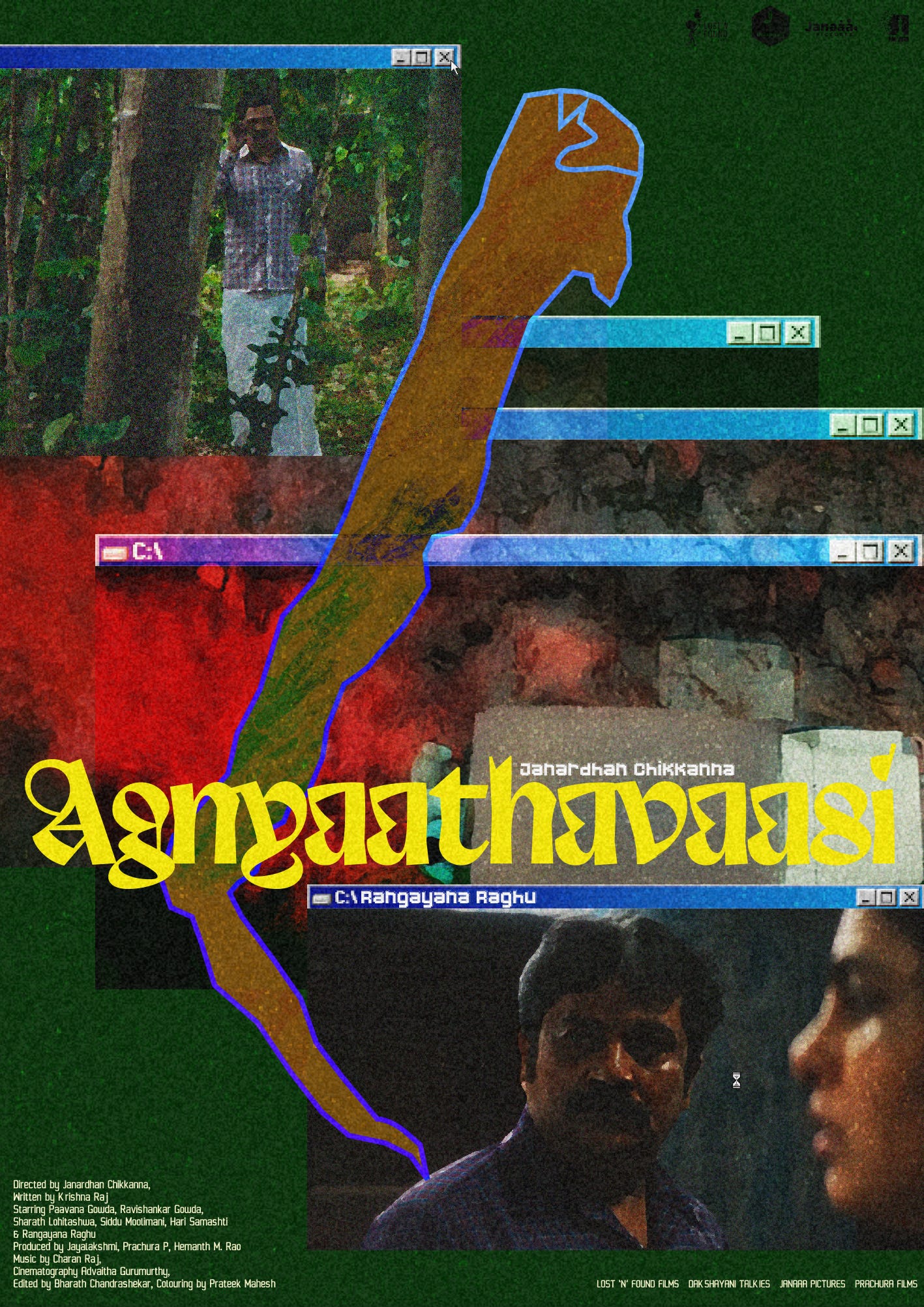
About Agnyaatavaasi
In the opening bits, we get a scene of a man cycling around the town, and we’re taken into that world along with him. We’re soon told his name, and the actor playing him is Dr. Vittal Rao, famous for surgery and burgery. But here, there isn’t an inch of that comedy in him.
Sorry for digressing right at the start. Let’s get back.
He starts picking flowers. And the way it’s shown, I was right into this film. This might apply only to a few people, but for me, it hit hard because that has been my daily routine for the past few months, ever since my father passed away in January. It was something he’d do every day. And I don’t know if he intentionally left a few flowers on the plant, but I do. And your character did too. And just like that, I was in the world of Agnyaathavaasi.
The movie establishes a few things before this, and then we’re introduced to our main character. We realise he’s a cop right when the man entering the house stands at attention as he sees Rangaayana Raghu. That’s where the story starts to unravel.
There’s an event, a mention of family members being far away, not in touch for over 10 years. Their mother passed away 25 years ago. There’s a lot of stress on how his mother eats only if her son has cooked, and how he’s particular about cooking every dish himself.
Then we’re introduced to the way the village works and the villagers, too. It’s not a town where people follow processes, it’s a town where people follow people to get things done.
After all this, there’s a beautiful editing pattern where we’re shown a few scenes from the future, not entirely clear, using jump cuts. You might feel confused, wondering if this is from a different timeline altogether. But the beauty of this edit hits a little later when the events of the previous day catch up, and we’re back here. It’s like déjà vu. You feel like this has happened before. It doesn’t hit you immediately, but when it does, it’s worth it.
Everything that happens in this film happens for a reason, even if it doesn’t make sense at first. Even when a man dies in the village, and our protagonist arrives, notices a few things around, and casually announces it’s a murder.
For a moment, you feel like maybe he’s someone like Sherlock Holmes, Hercule Poirot, or Benoit Blanc, and we’re going to see him slip into a monologue revealing his observations to his fellow policemen. But this is not that film.
What we see instead is how the village works. The cops aren’t ready to accept it’s a murder, and even if it is, they don’t want to ruin the corpse with a post-mortem because of the doctors and the paperwork. That’s a whole different story of incompetence. But that’s just how that world functions.
Instead of sharp observations and strong evidence, what we get are flashbacks. And through these flashbacks, we’re introduced to another very interesting character, the computer.
There are layers to this character, and the role it plays in this murder mystery that unfolds before us. This is a period of change, with people fleeing the country for a better life with the advent of computer technology. And with that comes the need to stay in touch with these people. Enter the computer, a machine that can do more than one job, connect us to the world outside, and help us communicate beyond letters.
The postman is slowly becoming obsolete as writing letters gets replaced with emails. Reminiscent of today’s time, where the art of Ghibli is being stolen by an AI, giving results in seconds. Sorry, digressing again.
But before I move on, through the dance of the character with the computer, we sure got our own Bruno Mars moment.
Now, through these flashbacks (and flashboxes), we’re introduced to the characters of the village, their stories, and their relationships. And these relationships are what play detective in our minds as we try to guess.
But there’s an anti-climax to all this guesswork. There is something that Rangaayana Raghu notices, but not because he’s a great detective. He notices it. He’s observant because he lives here and because he sees it everywhere.
There’s almost a Rashomon-esque treatment to this, where we see scenes played again from different points of view. And when we become aware of it, we kind of know who the killer is. But there’s still a lingering why.
This is something I’ve noticed in many things Hemanth Rao creates or is associated with. It’s the Hemanthness of his films. I remember asking him about the ending of Kavaludaari and why he had to bring that connection between the two characters. What was the thought behind it?
And I don’t even know where to start about the number of things he did with SSE. Even in a recent interview, he talked about how he likes something to remain within the characters rather than being revealed. The reason behind it is so beautiful. It’s something similar to what I debate about while talking about people’s donations to temples with their name displayed right up front, the intent suddenly changes, and now it’s all about them rather than it being about the temple or the festival. Anyways, what I was getting to is that even in this film, though he hasn’t directed it, there’s a scene where another man tries to kill, even while there’s already a plot in motion. This attempt is unknown to everyone, except the universe, or an entity looking over us and obviously, the viewer.
And even that man dies, caught within the already set-in-motion plot. This ripple effect eventually leads to the killer revealing herself. And even before that, we know she’s the killer. And at this moment, I felt a bit disappointed. Because, like I said earlier, we’re conditioned to expect the unexpected, to expect a big reveal by a detective-like figure.
But that’s exactly when you realise this is not that film. This film is something else altogether.
When it’s revealed how she decides to kill, in a way that nobody notices, something already known to a select few, it doesn’t need a computer or a genius detective to decode. This, in itself, reveals another layer of the man solving the mystery.
The three ways a mystery can be solved took me straight to The Prestige, with the way that final scene is edited and the way the ending is treated. The last frame at the gate is quite a special frame and shot. Haunting, mystical and perfect for a man living with his own dark shadows. In exile.
There’s a beautiful shot earlier in the film, and you think it’s just style over substance, but at the end, it makes perfect sense. The poison, the paashambara, works in water, unnoticed by humans, but noticed by animals or certain beings.
But more than the paashambara, there’s another poison killing a man from within, a man in exile. And when this man in exile passes over a water body in a police jeep, the contamination is revealed to the universe, to the entity above, to us, that there’s more to this man than meets the eye. And he lives with it. Every cop in the village doesn’t want to call it a murder, wants the village to go on as it is, not once in so many years as even the man calling this a murder tried to lodge a complaint or case but now he wants to put an end to this by following procedures all of a sudden. That’s because this is more than just a death but a mirror that the present is placing to our man of his past, and he’s revealed the man he was, who is now in exile. The agnyaatavasi becomes the detective not because he’s smart, but because he was the murderer once.
You wonder why the crow doesn’t touch the payasam. And we know at the end why
.