
Boring Binaries
Number 19

About Kantara
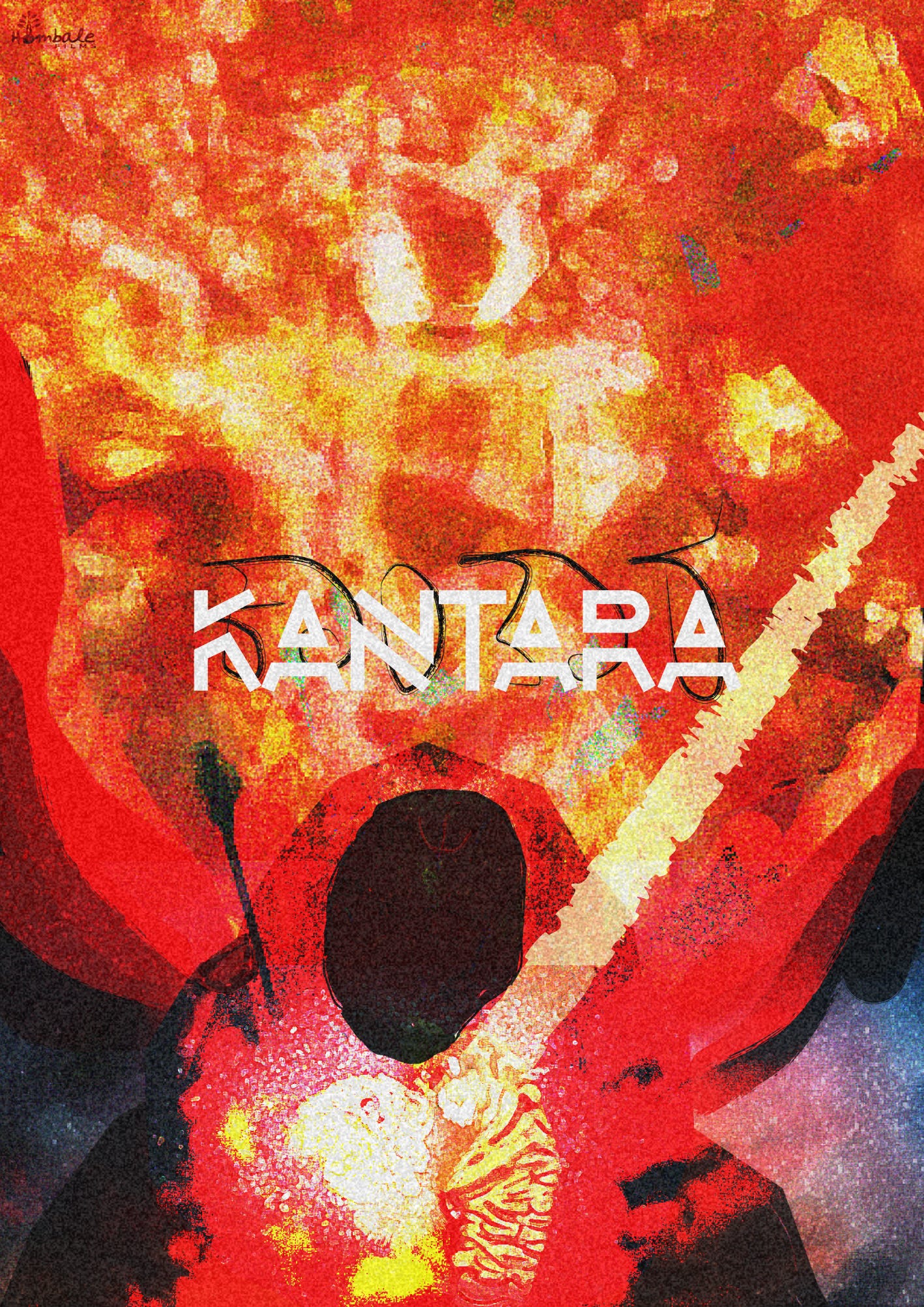
Rewatched Kantara: Chapter 1. This time in IMAX. I completely agree with Arvind Kashyap when he said it surely is a spectacle to be witnessed on the biggest possible screen. And it was. I noticed that at a few places the aspect ratios change, and there were a few scenes that were just something special.
There’s something I noticed in Kantara: Chapter 1. Beyond the physical action, the transformation, the scenes of possession, and the daiva performances, it’s Rishab’s eyes that stayed with me. His gaze shifts, first responding to a threat, then suddenly softening to an immediate innocence, as if he’s witnessed something beyond comprehension. That, to me, is one of the most beautiful moments in this film’s coming together. I saw something similar in the first Kantara, especially when the dhani says to Shiva, “Aadre ninna aapandu abbarave bere”, but here, the transitions are just so seamless.
(Spoilers ahead.)

For the past week, I’ve debated with friends about why Kantara struck such a chord with me, even though it didn’t with most of them. The critique: “Yes, we like the spectacle and scale, but where is the story? It’s convenient storytelling. It’s all black and white, one side is just bad, the other is just too good.”
But the stories I’ve grown up hearing about daivas, just like in the film’s opening, where tales of their moola are passed on to Shiva, almost always follow a similar pattern. Whenever someone is wronged, either a daiva is born or a daiva appears to protect. Take the story of Kallurti and Kalkuda. The king in the story cuts off Beeru’s (Kalkuda) hand and leg after he carves the Gommateshwara in Karkala, an act of pure evil. Yet, later, he still goes on to carve one in Venur. Does history report it this way? No. That’s where there is a grey area when we bring in the topic of factual accuracy to this film. Especially when all the stories have been recorded in oral tradition* and passed on from one generation to another. There are stories wherein we have underwater golden palaces, so let’s move beyond that.
These stories are often told to children, and of course, the source itself drives the storytelling. In the film, the root of the king and his family’s evil is established right from the start: a young boy sees his father killed by the people of Kantara. For him, his father was just fetching spices and entering a garden, only to meet his end. The boy seeks refuge with a clan of black magicians. For him, morality, justice, revenge - they’re all rooted in that one incident. That’s his world.
He grows up in fear, isolated, and eventually has two children of his own. One is stillborn but brought to life by the Kadapa black magicians. Unsurprisingly, loyalty is forged right there. The son becomes king. A spoilt brat, womaniser, drunk, and ascends the throne, while the daughter manages the treasury.
The movie truly begins when the young king, deciding to hunt in the same forest where his grandfather died, barely escapes its mysterious ways. After one of their soldiers is captured by the people of Kantara, they return the “favour” by hunting in the king’s territory.
Another common argument: “The movie could’ve worked without the first half. Why so much setup?” But that’s where all the fun lies. We see Rishab Shetty deliver a Vallavarayan Vanthiyathevan-esque entrance. A wild, chaotic energy in the market, reminiscent of Karthi’s havoc in Tanjai (Opening of Mani Ratnam’s Ponniyin Selvan 1). Adventurous, but with a flavour all its own.
The chariot sequence through the market, Rishab and his friends on a ride meant for gods and festivals, was exhilarating. During this visit, they realise their village’s produce is being sold in the city marketplaces. They get an idea of trade and barter, and another conflict is born, the seed of a civilisation for the people of Kantara.
Why does all this world-building matter? Because there’s something inherently unsettling to those in power when new people begin to rise. The old rich cling to their access, their exclusivity, their private space, and resent the ascent of the new. This is true today as much as it was then. The people of Kantara begin to trade, to build their own mini-civilisation in the forest, and the king grows uneasy. Surprisingly, the princess, however, is entirely at ease with it.
Rukmini Vasanth (Kanakavati) has a standout scene here: she lavishes Rishab (Berme) with palace luxuries, only to ask him to take her to Ishwara’s garden. Her eyes shining, reminiscent of Shobana in Manichitrathazhu. She’s gently but firmly rebuffed, reminded of the boundaries she cannot cross. Humiliation follows, compounded when the king’s aide, beaten in front of his subjects, seeks revenge. How does the old guard strike back? By targeting the forest itself. Gulshan Devaiah nails the bitterness in his delivery as Kulasekhara; the trailer line lands even more powerfully in context.
I won’t dwell too much on the forest fire and what follows, though I was fascinated by where the film would go next. I half-expected a sequence like that, but still, the narrative managed to surprise. And I was wondering, what’s next?
The use of the tiger in Kantara deserves mention. So many daiva stories involve a tiger, and even here, the tiger’s arrival is utterly captivating. Every time the tiger showed up, I was emotional. I don’t know why. Maybe it was just the presence of an old, wise tiger or the background score that kicks in every time it showed up or it could just be my childhood dream to have a tiger cub as a pet. Nonetheless, it made me emotional.
The film explores greed and boundaries with real nuance. Even the people of Kantara, initially content, are drawn into wanting more as trade grows. They become hypocrites, just like the antagonists. And as they quest for more, they ignore the tiger’s warning and enter the Kadapa’s world. Here again, in the chaos of a blistering action sequence, Rishab’s eyes tell the story: from terror, to rage, to strength, and finally, to a pure, disarming innocence as he’s reminded of his origins and the tiger’s protection. That innocence, that’s what lingers after the spectacle.
Kulasekhara dies. The king’s daughter seeks peace in the forest, denied redemption by Berme. She pleads for their daiva to be installed in their temple, convinced the gods are angry for the destruction wrought upon Shiva’s garden. Rukmini is given another stellar line, echoing the first film, questioning who really delivers these verdicts. The narrative shifts again, as the daivas agree to move to the temple, culminating in a beautiful Brahmakalasha.
I attended a Brahmakalasha recently, so watching those preparations, the feasts, the Nema/Kola - the entire sequence hit differently. All of it left me with a deep sense of awe.
Another interesting exploration was the idea of the king’s daughter, bearing both the royal blood and Kadapa’s magic, who betrays them. It’s a sharp, powerful moment for an antagonist.
Black magic and war follow. I’ll be brief: I’ve seen many cinematic battles, Kurosawa’s, Ridley Scott’s, those in Game of Thrones, LOTR, and even Mani Ratnam’s (PS films, inspired, albeit less successfully, by Kurosawa). Kantara delivers a pretty convincing battle. Not every shot lands, but most do. Black magic shapes the conflict; a warrior from legend returns, intent on altering his fate.
Then comes the mystical. The mayavi protects Berme in a battle he cannot win, still searching for his purpose. The quest in the moola sthana, the entry of Brahmarakshasa, a figure I’ve heard about since childhood, anchors the narrative in myth. The detail of the Brahmarakshasa straightening curly hair, just as told in a story earlier, was a wonderful touch, suggesting, maybe, these stories aren’t just stories.
The climax: the Brahmarakshasa bows to Berme as he assumes the form of Shiva, trident and serpent in hand. The scene is arresting. It leaves you absolutely still, goosebumps, nothing less.
In the final stretch, Kanakavati faces off against the daiva, challenging him: Will he strike a woman? This introduces a new dimension to the story, something hidden until that moment. The final line underscores the daiva’s presence and power, putting humanity’s smallness in stark relief - just a little finger. The dialogue about belaku and darshana follows, as the Nema/Kola with Varaha Roopam brings things full circle.
This is a film made for the big screen. Don’t miss it. Every question may not be answered, but the film leaves you with more, especially as Shiva closes with yet another question.
PS. The horse stretch in the film left me wondering how they even pulled it off.
*Adding an excerpt from Vivek Rai’s paper on Epics in the Oral Genre System of Tulunadu:
This process of compilation leading to ballad-cycle and folk epic can be illustrated by taking the Panjurli paddana as a model. More than fifteen paddanas have already been collected, all of them dealing with the Panjurli bhuta. Some of them concern genesis, and the remaining ones relate to diffusion in different parts of the Tuluva region. Those relating to origins vary in content and also in length. More than five variants agree as far as the core of the paddana is concerned; the Panjurli bhuta is the transformation of a wild boar’s offspring that were cursed for their evil deeds, mainly for destroying crops, and subsequently transformed into the bhuta. Interestingly, in one version, the narrative about the genesis of Panjurli is made to include even the Vedic gods, as Vishnu’s sweat is transformed into Panjurli. Likewise, Shiva has been depicted as a character possessing the qualities of both the deity and a village farmer.
More than ten paddanas exist that give an account of the adventures of Panjurli bhuta and thereby its dissemination in the Tuluva region. All of the episodes substantiate the supremacy of Panjurli bhuta and the reasons for its worship in different places. With its magical power, Panjurli causes buffaloes tethered to a jackfruit tree to vanish, momentarily blinds the priest who carried the god in procession at Dharmasthala, makes the elephant of the Kepaadi temple fall sick, does the same to the cattle at Kalle beedu, kills the two wives of Hebri Ballala, and so on.